
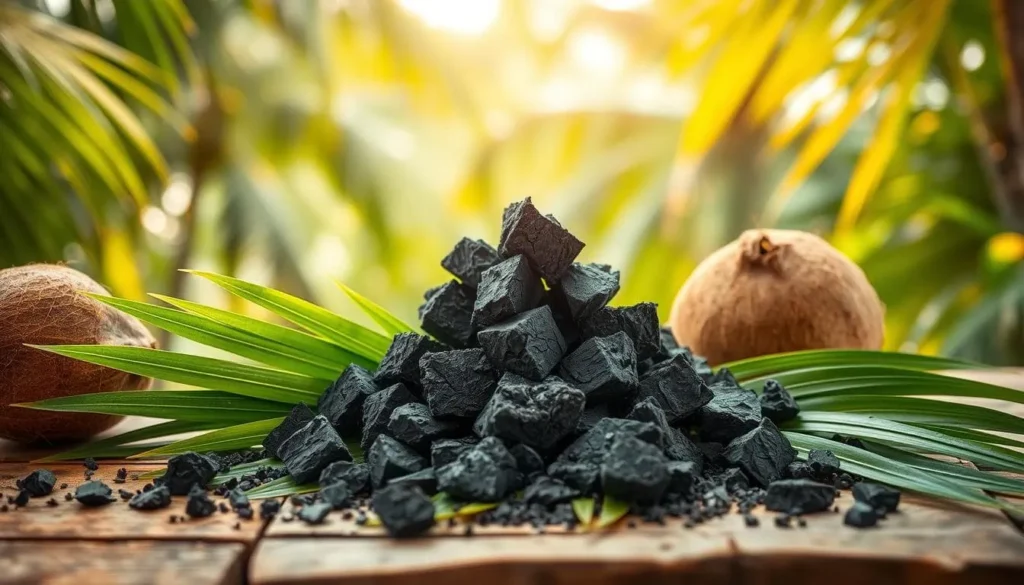
Discover the amazing benefits of coconut charcoal for skin, teeth, and more. Unlock its natural detoxifying power.
Discover the versatility of coconut charcoal, a natural resource that’s gaining popularity worldwide. From purifying water to enhancing skin care, its uses are diverse and beneficial.

This eco-friendly product is not only sustainable but also packed with numerous health benefits. Its unique properties make it an excellent tool for various applications, from industrial uses to personal care.
Key Takeaways
- Natural and eco-friendly product
- Multipurpose uses in health, beauty, and industry
- Effective in water purification
- Enhances skin care routines
- Sustainable and renewable resource
What Is Coconut Charcoal?
Coconut charcoal is a type of charcoal made from coconut shells, offering a cleaner and more sustainable alternative to traditional charcoal. It is produced through a process that involves carbonizing coconut shells at high temperatures, resulting in a product that is not only eco-friendly but also highly efficient.
The Origins of Coconut Charcoal
Coconut charcoal originates from regions where coconuts are abundantly cultivated, such as Indonesia. The production process begins with the collection of coconut shells, which are then carbonized to produce charcoal.
How Coconut Charcoal Differs from Other Charcoals
Coconut charcoal differs significantly from other types of charcoal in terms of its density, burn time, and heat output. Its higher density allows for a longer burn time, making it more economical in the long run.
Density and Burn Time Comparison
| Type of Charcoal | Density (g/cm³) | Burn Time (hours) |
|---|---|---|
| Coconut Charcoal | 0.6 | 5-6 |
| Wood Charcoal | 0.4 | 2-3 |
Heat Output Differences
Coconut charcoal also provides a consistent heat output, which is crucial for applications like shisha and hookah. The heat output is generally higher and more stable compared to traditional charcoal.
The Manufacturing Process of Coconut Charcoal
From coconut shells to premium charcoal, the manufacturing process is both an art and a science. It involves several critical steps that ensure the final product is of high quality and meets the demands of various applications.
From Coconut Shells to Premium Charcoal
The transformation of coconut shells into charcoal begins with harvesting and preparation. Coconut shells are collected from various sources, cleaned, and prepared for the carbonization process.
Harvesting and Preparation
The initial step involves selecting mature coconuts and extracting their shells. These shells are then cleaned and dried to remove any moisture, ensuring that they are ready for carbonization.
Carbonization Process
The carbonization process is where the real magic happens. The prepared coconut shells are heated in a low-oxygen environment, a process known as pyrolysis. This step converts the coconut shells into charcoal, enhancing their adsorption capabilities.
Sustainable Production Practices
Sustainability is a crucial aspect of coconut charcoal production. Many manufacturers, especially those in Indonesia, are adopting eco-friendly practices to minimize environmental impact. This includes using coconut shells that would otherwise be discarded, thus reducing waste.
| Production Stage | Description | Environmental Impact |
|---|---|---|
| Harvesting | Coconut shells are collected and cleaned. | Low impact, utilizes waste material. |
| Carbonization | Coconut shells are converted into charcoal through pyrolysis. | Moderate impact, requires energy. |
| Packaging | Charcoal is packaged for distribution. | Variable impact, depends on packaging materials. |
By adopting sustainable practices, the production of coconut charcoal not only results in a high-quality product but also contributes to a more environmentally friendly industry.
The Environmental Benefits of Coconut Charcoal
As the world seeks greener alternatives, coconut charcoal stands out for its environmental advantages. Unlike traditional charcoal, coconut charcoal is made from coconut shells, a waste product that would otherwise be discarded.
Eco-Friendly Alternative to Wood Charcoal
Coconut charcoal is an eco-friendly alternative to wood charcoal. The production of wood charcoal often leads to deforestation and habitat destruction. In contrast, coconut charcoal utilizes coconut shells, reducing waste and the environmental impact associated with deforestation.
Reducing Carbon Footprint
The production process of coconut charcoal has a lower carbon footprint compared to traditional charcoal. Coconut charcoal burns cleaner, producing less smoke and ash. This not only improves air quality but also reduces the overall carbon footprint.
Waste Reduction Benefits
Using coconut shells for charcoal production helps in reducing agricultural waste. This practice supports waste management and converts waste into a valuable resource.
Renewable Resource Advantages
Coconut trees are a renewable resource, and their cultivation for coconut charcoal does not lead to deforestation. This makes coconut charcoal a sustainable option for various applications, including shisha and hookah.
| Environmental Benefits | Coconut Charcoal | Wood Charcoal |
|---|---|---|
| Deforestation Impact | No | Yes |
| Waste Utilization | Yes | No |
| Carbon Footprint | Lower | Higher |
Indonesian Coconut Charcoal: The Gold Standard
Indonesian coconut charcoal stands out due to its exceptional production standards. The country’s coconut charcoal has gained international recognition for its quality, making it the preferred choice among consumers and manufacturers alike.
Why Indonesian Shisha Kohle Dominates the Market
Indonesian shisha kohle has several advantages that contribute to its dominance in the market. Two key factors are its unique geographical advantages and traditional production expertise.
Unique Geographical Advantages
Indonesia’s tropical climate and abundant coconut resources provide an ideal environment for coconut charcoal production. The country’s geography allows for sustainable harvesting practices, ensuring a consistent supply of high-quality coconut shells.
Traditional Production Expertise
Indonesian producers have honed their skills through generations, mastering traditional methods that enhance the quality of the charcoal. This expertise, combined with modern production techniques, results in a superior product.
Inside an Indonesian Shisha Charcoal Factory
A typical Indonesian shisha charcoal factory employs a combination of traditional techniques and modern machinery to produce high-quality charcoal. The process involves careful selection of coconut shells, precise carbonization, and rigorous quality control.
Quality Control Standards
Indonesian shisha charcoal factories adhere to strict quality control standards to ensure their products meet international standards. This includes checking for moisture content, ash content, and burn time.
| Quality Parameter | Indonesian Shisha Charcoal | Other Charcoal Types |
|---|---|---|
| Moisture Content | Low (<5%) | Variable (5-15%) |
| Ash Content | Low (<3%) | Higher (5-10%) |
| Burn Time | Long (3-4 hours) | Variable (1-3 hours) |
The rigorous quality control and unique production methods make Indonesian coconut charcoal the gold standard in the industry.
Coconut Charcoal for Shisha and Hookah
Coconut shisha charcoal is revolutionizing the way people enjoy their hookah sessions with its unique advantages. As the popularity of shisha and hookah continues to grow, enthusiasts are seeking better alternatives for their smoking experiences.
Benefits of Using Coconut Shisha Charcoal
Coconut shisha charcoal offers several benefits over traditional charcoal options. Two of its most significant advantages are minimal ash and smoke production, and consistent heat distribution.
Minimal Ash and Smoke Production
One of the key benefits of coconut shisha charcoal is its ability to produce minimal ash and smoke. This results in a cleaner and more enjoyable smoking experience. The low ash production also means less mess and easier cleanup.
Consistent Heat Distribution
Coconut shisha charcoal provides a consistent heat distribution, which is crucial for enjoying shisha. This consistency ensures that the flavor of the shisha is released evenly, enhancing the overall experience.
| Charcoal Type | Ash Production | Heat Distribution |
|---|---|---|
| Coconut Shisha Charcoal | Low | Consistent |
| Traditional Charcoal | High | Inconsistent |
Coconara Shisha Charcoal: A Premium Option
Coconara Shisha Charcoal is a premium brand that stands out in the market for its high-quality coconut charcoal. It is known for its long-lasting heat and minimal ash production, making it a favorite among shisha enthusiasts.
How to Properly Light and Use Coconut Charcoal for Shisha
To get the most out of your coconut shisha charcoal, it’s essential to light and use it correctly. Start by placing a single piece of charcoal on a heat-resistant surface and ignite it using a torch or other suitable method. Once the charcoal is fully lit, place it in your hookah bowl to enjoy a smooth and flavorful shisha experience.
Health and Beauty Applications of Coconut Charcoal
The versatility of coconut charcoal extends far beyond its industrial applications, offering numerous health and beauty benefits. This natural product is now being harnessed for various personal care routines, thanks to its detoxifying and purifying properties.
Coconut Charcoal for Skin Detoxification
Coconut charcoal is increasingly being used in skincare products due to its ability to detoxify and purify the skin. It helps in removing impurities and excess oil, making it a popular ingredient in face masks and scrubs.
Face Masks and Scrubs
Face masks and scrubs containing coconut charcoal can help in deep cleansing the skin, reducing pores, and improving overall skin texture. These products are particularly beneficial for individuals with acne-prone or oily skin.
Treating Acne and Oily Skin
The absorbent properties of coconut charcoal make it effective in controlling acne and reducing oiliness. It helps in drawing out impurities and toxins from the skin, thereby reducing the occurrence of acne and blackheads.
Teeth Whitening with Coconut Charcoal
Coconut charcoal is also used in oral care products for its teeth whitening properties. It helps in removing stains and plaque, resulting in a brighter and healthier smile.
Digestive Health Benefits
In addition to its beauty benefits, coconut charcoal is also known to aid in digestive health. It acts as a natural detoxifier, helping to remove toxins and waste products from the digestive system.

Overall, the health and beauty applications of coconut charcoal make it a valuable addition to one’s personal care routine. Its natural and effective properties offer a range of benefits, from skin detoxification to digestive health.
The Science Behind Coconut Charcoal’s Detoxifying Power
The detoxifying power of coconut charcoal is rooted in its unique properties as an activated carbon. Activated carbon is a form of carbon that has been treated to increase its adsorption capabilities, making it highly effective at attracting and holding onto various substances, including toxins.
Understanding Activated Carbon Properties
Activated carbon’s effectiveness stems from its highly porous structure, which provides a large surface area for adsorption. Coconut charcoal, in particular, is made by heating coconut shells in the absence of oxygen, a process that activates the carbon and enhances its adsorption properties.
Adsorption Capabilities and Benefits
The adsorption capabilities of coconut charcoal make it beneficial for various applications, including detoxification. By attracting and holding onto toxins, coconut charcoal can help remove impurities from the body.
How Toxins Bind to Coconut Charcoal
Toxins bind to coconut charcoal through a process known as adsorption, where the toxin molecules are attracted to the surface of the activated carbon. This binding process is crucial for the detoxifying effects of coconut charcoal.
Scientific Studies Supporting Detoxification Claims
Several scientific studies have investigated the detoxifying effects of activated carbon, including coconut charcoal. These studies provide evidence that coconut charcoal can be effective in removing toxins and impurities, supporting its use for detoxification purposes.
Alternative Uses for Coconut Charcoal
Coconut charcoal is a multifaceted product with a wide array of uses, from household applications to culinary enhancements. Its unique properties make it a valuable resource in various contexts.
Water Filtration Applications
Coconut charcoal is highly effective in water filtration due to its high adsorption capacity. It can remove impurities, odors, and tastes from water, making it a popular choice for water filters.
Odor Elimination in Homes
Using coconut charcoal for odor elimination is a natural and chemical-free way to freshen up homes. It can absorb moisture and odors, leaving the air feeling clean and fresh.
Culinary Uses and Flavor Enhancement
Coconut charcoal is used in various culinary applications, including grilling and smoking. It adds a unique flavor to foods and can be used to create visually appealing dishes.
Grilling and Smoking Techniques
When used for grilling and smoking, coconut charcoal provides a consistent and long-lasting heat. It’s ideal for slow-cooking meats and infusing them with a smoky flavor.
Comparing with Traditional BBQ Charcoal
Coconut charcoal has several advantages over traditional BBQ charcoal. It’s more eco-friendly, produces less ash, and burns more efficiently.
| Feature | Coconut Charcoal | Traditional BBQ Charcoal |
|---|---|---|
| Eco-Friendliness | High | Low |
| Ash Production | Low | High |
| Burn Efficiency | High | Medium |

How to Choose Quality Coconut Charcoal Products
With numerous coconut charcoal products available, identifying quality ones requires knowledge of specific characteristics. The growing demand for coconut charcoal has led to a variety of products in the market, making it essential to understand what makes a product premium.
Key Indicators of Premium Coconut Charcoal
Several factors contribute to the quality of coconut charcoal. Understanding these can help in making an informed decision.
Density and Hardness Factors
Density is a critical factor as it affects the burn time and heat output. Harder coconut charcoal tends to burn longer and more consistently. Look for products with a high density for better performance.
Ash Content Considerations
The ash content is another crucial indicator. High-quality coconut charcoal should have a low ash content, as excessive ash can be a nuisance and affect the taste when used for shisha or hookah. Products with minimal ash are preferable.
| Characteristic | High-Quality Coconut Charcoal | Low-Quality Coconut Charcoal |
|---|---|---|
| Density | High | Low |
| Ash Content | Low | High |
| Burn Time | Long | Short |
Top Brands in the US Market
Some brands have established themselves as leaders in the coconut charcoal market. These include Coconara and Three Kings, known for their consistent quality and customer satisfaction.
Price vs. Quality Considerations
While it’s tempting to opt for the cheapest option, it’s essential to consider the relationship between price and quality. Generally, very low-priced coconut charcoal may compromise on quality. It’s worth investing in a mid-range to premium product for better performance and safety.
By considering these factors, consumers can make informed decisions when purchasing coconut charcoal products.
Conclusion: Embracing the Versatility of Coconut Charcoal
Coconut charcoal has proven to be a versatile and valuable resource, offering a wide range of benefits across various applications. From its use in shisha and hookah to its role in health and beauty, coconut charcoal has established itself as a premium product.
Its eco-friendly production process and sustainable practices make it an attractive alternative to traditional charcoal products. As consumers become more environmentally conscious, the demand for coconut charcoal is likely to continue growing.
Whether you’re looking to enhance your shisha experience with Coconara Shisha Charcoal or seeking a natural solution for skin detoxification, coconut charcoal is a product worth exploring. With its numerous benefits and applications, it’s clear that coconut charcoal is more than just a product – it’s a lifestyle choice.
FAQ
What is coconut charcoal and how is it made?
Coconut charcoal is a type of charcoal made from coconut shells through a carbonization process. It’s produced by heating coconut shells in a low-oxygen environment, resulting in a highly porous and durable charcoal product.
What are the benefits of using Indonesian coconut charcoal for shisha?
Indonesian coconut charcoal, also known as Indonesian shisha kohle, is renowned for its high quality and is considered the gold standard. It offers a cleaner, more consistent burn, and is preferred by shisha enthusiasts worldwide due to its minimal ash production and consistent heat distribution.
How does coconut charcoal compare to traditional charcoal in terms of environmental impact?
Coconut charcoal is a more eco-friendly alternative to traditional wood charcoal. It’s made from a renewable resource (coconut shells), reduces waste, and has a lower carbon footprint. Sustainable production practices in Indonesian shisha charcoal factories further minimize its environmental impact.
Can coconut charcoal be used for purposes other than shisha and hookah?
Yes, coconut charcoal has a variety of uses beyond shisha and hookah. It’s used in water filtration, odor elimination, culinary applications, and even for health and beauty purposes such as skin detoxification, teeth whitening, and digestive health.
What should I look for when buying coconut charcoal products?
When purchasing coconut charcoal, look for key indicators of quality such as density, hardness, and low ash content. Top brands in the market, like Coconara Shisha Charcoal, offer premium products. Consider the price vs. quality to ensure you’re getting a product that meets your needs.
Is coconut charcoal suitable for grilling and smoking food?
Yes, coconut charcoal can be used for grilling and smoking. It provides a unique flavor and has several benefits, including minimal ash production and consistent heat. When using coconut charcoal for culinary purposes, consider techniques such as grilling and smoking to enhance the flavor of your dishes.